

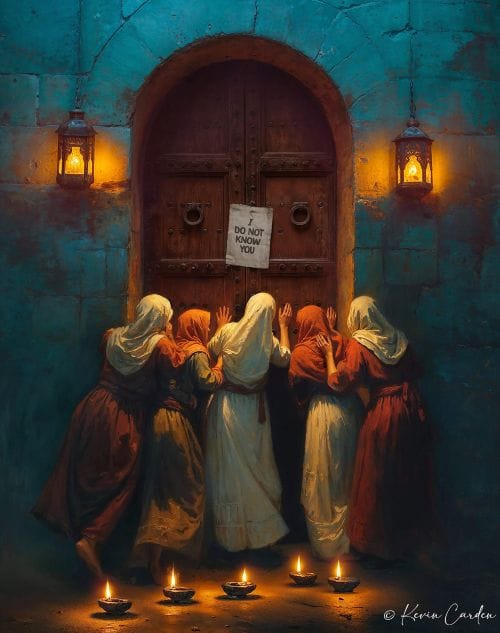
The biblical meaning of the Parable of the Ten Bridesmaids (Matthew 25:1-13) is a stern warning to stay spiritually prepared and vigilant for the Second Coming of Jesus Christ. He is coming for those who are eagerly waiting for him (Hebrews 9:28). Jesus used first-century Jewish wedding customs to illustrate that when the Day of Judgment arrives, outward religious appearance will not compensate for a lack of genuine inner faith.
The Significance of the Wedding Parable
In a first-century Jewish wedding, the bridesmaids (historically referred to as the bridal attendants or companions) played a critical, active role in the ceremony. They were not just passive guests waiting for a party; they were responsible for guiding the bride through the darkness and officially initiating the wedding celebration. Their specific duties on the night of the ceremony unfolded in three distinct phases:
- Guarding and Comforting the Bride at Her Home
Ancient Jewish weddings took place at night, and the exact hour of the bridegroom’s arrival was kept a secret. The groom would leave his father's house with his friends to claim his bride, intentionally aiming to surprise her.
- The Vigil: The bridesmaids gathered at the bride's family home to keep her company.
- Preparation: They helped the bride dress in her bridal attire and jewelry.
- Vigilance: Because the wait could last deep into the night, the bridesmaids were tasked with staying awake, keeping their lamps lit, and watching the dark roads so the bride wouldn't be caught off guard.
- Lighting the "Midnight" Procession
When the groom neared the house, a shout would ring out through the village: "Behold, the bridegroom comes!" This was the cue for the bridesmaids to leap into action.
- The Torchbearers: In a time before streetlights, the bridesmaids acted as the human lighting system for the entire wedding party.
- The Crisis: It was at this moment the foolish bridesmaids realized their handheld lamps were running dry. They frantically left to find oil merchants awake at midnight—a nearly impossible task that highlighted their delayed preparation. The wise bridesmaids weren't being selfish by refusing to share; they simply knew their portable flasks only held enough fuel for themselves.
- The Escort: They trimmed their wicks, lit their lamps, and walked out into the dark streets to meet the groom. They then surrounded the bride and groom, forming a glowing, joyful escort to guide the couple back to the groom’s father's house.
- Public Witness: The burning lamps signaled to the entire village that a wedding covenant was being finalized, drawing neighbors out of their homes to cheer.
- Serving as Witnesses at the Banquet Door
Once the procession reached the groom's house, the final phase of the ceremony began.
- Guarding the Entrance: The bridesmaids entered the courtyard directly ahead of the couple. Because space and food were strictly budgeted, the entrance was heavily regulated.
- Validating the Guests: The bridesmaids, with their burning lamps, essentially served as a living "guest list" to identify who belonged to the wedding party.
- Sealing the Feast: Once the bridal party entered, the heavy courtyard doors were shut and barred for safety and privacy. Anyone left outside without a light to identify themselves was barred from entry, as they could not prove their connection to the wedding party.
The Core Spiritual Lessons
Spiritual Readiness Cannot Be Borrowed or Outsourced
When the foolish bridesmaids begged for oil, the wise bridesmaids refused because spiritual preparation is strictly personal. You cannot survive on "borrowed oil"—meaning you cannot rely on the faith of your parents, your spouse, or your pastor to save you. Every individual must possess their own direct connection to the Holy Spirit.
Outward Appearances Can Be Deceptive
To any observer, all ten bridesmaids looked identical at the start of the night. They all carried lamps, dressed the part, and slept in the same place. The critical difference—the hidden supply of extra oil—only became clear when crisis struck at midnight. The parable teaches that many belong to the visible church but lack a true saving relationship with Christ.
True Intimacy Protects Against Deception
The most sobering moment occurs when the foolish bridesmaids return to the locked banquet door. The bridegroom does not say, "You are late," but rather, "I do not know you." This echoes Matthew 7:21-23, reinforcing that Christ desires deep, interactive intimacy over ritualistic performance.
Eagerly Waiting for the Bridegroom: The Extra Oil for Your Lamp
Look closely at your life right now: Are you actively filling your own vessel through deep, private intimacy with Christ, or are you dangerously coasting on the borrowed faith of those around you?
Comments